
The Most Iconic AI Fruit Story Couples (And How to Ship Your Own)
Some pairings just work — the comment section splits into teams, people argue about who's right, and the next episode gets requested before you've even posted it. Here are four pairing dynamics worth building a series around, and how to design your own.
Aug 10, 2026 · 8 min read · Content Ideas
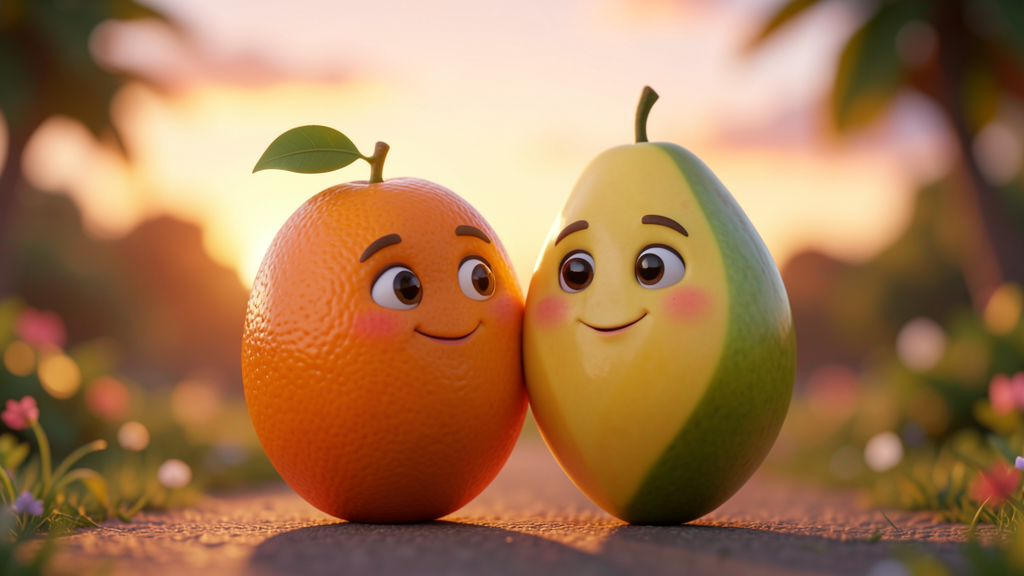
Why pairing dynamics drive comments
A single character can carry a premise. Two characters with a defined relationship carry a debate — and debates are what fill comment sections. "Team A" versus "Team B" energy, viewers picking sides, people tagging friends to argue about who was right: none of that happens with a solo character the same way it happens with a pairing.
The strongest fruit-story accounts tend to run a small recurring cast of two or three core pairings rather than a new random couple every video. Recognition compounds — viewers who already have an opinion about a pairing are more likely to click the next video about them.
Four pairing dynamics worth building around
Orange Mom & Boss Mango
The Power CoupleTwo strong personalities who clash constantly but always end up on the same side by the final scene. Their arguments are loud, their reconciliations louder — viewers either fully ship it or fully don't, and both reactions drive comments.
Hot Peach & Gangster Pineapple
The Unlikely PairAn odd-couple dynamic where the appeal is entirely in the contrast — one dramatic, one deadpan. Unlikely pairings work because the tension comes from mismatched energy, not conflict, which keeps the tone lighter and more replayable.
Strawberry Mom & Banana Dad
The Comeback StoryA pairing best used for redemption arcs — betrayal followed by an earned reconciliation. Viewers who watched the original conflict video will actively seek out the sequel to see if these two get back together.
Ananas Girl & Orange Kid
The Found FamilyNot a romantic pairing — a sibling or best-friend dynamic. These perform differently than romance-coded pairs: comments skew toward relatability and nostalgia rather than debate, which is its own valuable engagement type.
How to design a pairing worth shipping
Give them opposite instincts
One impulsive, one cautious. One dramatic, one deadpan. Contrast is what makes a pairing interesting to watch react to the same situation.
Pick one recurring conflict source
Money, trust, family, ambition — one theme repeated across episodes builds a pairing's identity faster than a new conflict every time.
Let them be right sometimes each
A pairing where one character is always wrong stops being fun to debate. Split the wins.
End on a question, not a resolution
"Are they getting back together?" keeps a pairing's series alive longer than a tidy happy ending.
Build Your Own Pairing
Pick two characters, decide their dynamic, and describe a premise using the Zyvo's AI Fruit Story maker — the tool generates the story, dialogue, and animated scenes from there.
Open the Paid AI Fruit Story Tool →Related Articles
AI Fruit Story Character Ideas and Storylines
Eight fruit-character pairings with clear conflicts and adaptable story hooks.
27.05.2026
The Wildest AI Fruit Story Plot Twists (And How to Write Your Own)
Five twist structures that outperform a straightforward reveal, with real examples.
10.08.2026
How to Write the Perfect AI Fruit Story Prompt (Formula + Examples)
A repeatable 6-part prompt formula, weak-vs-strong examples, and a formula variant for each drama type.
09.08.2026


