
The Wildest AI Fruit Story Plot Twists (And How to Write Your Own)
The videos that get sent around a group chat aren't usually the ones with the biggest drama — they're the ones with the twist nobody saw coming. Here are five twist structures that consistently outperform a straightforward reveal, and how to build your own.
Aug 10, 2026 · 9 min read · Content Ideas

Why a twist outperforms a straight reveal
A standard reveal video gives viewers exactly what the thumbnail promised. It can still perform well, but it rarely gets shared — there's nothing surprising to tell someone about. A twist video gives viewers a story they want to retell, which is a completely different kind of distribution than the algorithm alone provides.
The twist doesn't need to be complicated. It needs to reframe something the viewer already assumed in the first ten seconds. That's the entire mechanism — everything else is packaging.
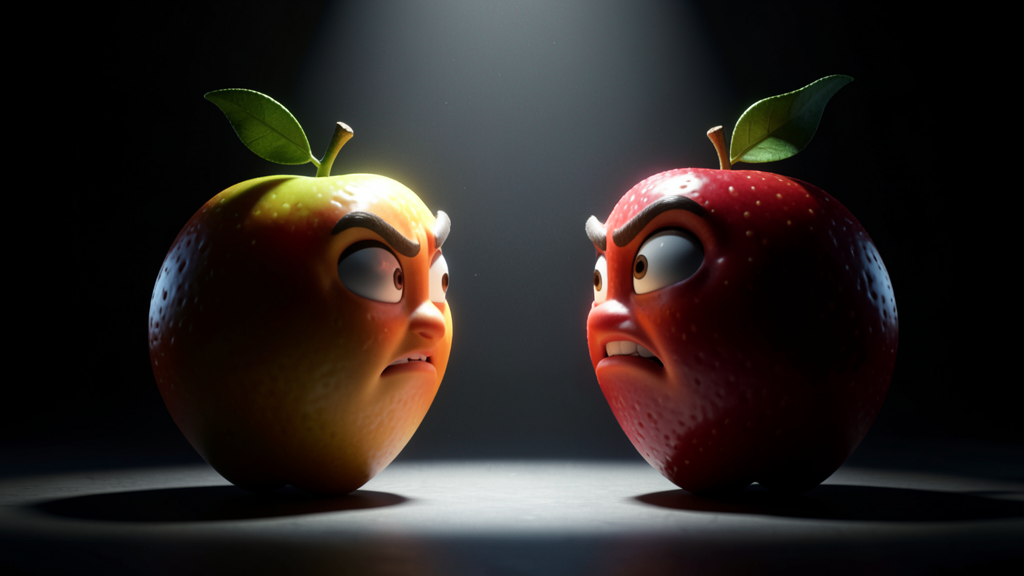
Five twist structures worth stealing
The Reveal Was Staged
Orange Mom "catches" Banana Dad on a secret call — except he's whispering because he's planning her surprise party. The whole video plays as a cheating reveal until the last three seconds.
Why it works
The genre-flip twist works because the viewer has seen a hundred cheating-reveal videos and thinks they know the shape of this one. Subverting the exact format they expect is what makes it shareable — people send it to friends just to watch their reaction to the same rug-pull.
The Villain Had a Reason
Gangster Pineapple has been "sabotaging" Hot Peach's food cart all season. The twist: he's been quietly buying her unsold stock every night so she wouldn't know how badly it was failing.
Why it works
Turning the antagonist into the actual hero retroactively re-colors every earlier scene. Viewers often go back and rewatch part one immediately after seeing part two — which is exactly the replay behavior that helps a series perform.
The Twin Was the Twist All Along
Everyone assumes Banana Dad has a secret twin explaining his impossible alibi. The actual twist: there is no twin — it was Orange Mom in disguise, testing him.
Why it works
Setting up the obvious trope (secret twin) and then subverting it with a smarter explanation rewards viewers who've watched enough of the format to predict the cliché — and surprises the ones who didn't see it coming either way.
The Comeback Was the Setup
Strawberry Mom returns as the new owner of the house she was kicked out of. The twist: she immediately hands the deed back — she only wanted to prove she could.
Why it works
A power-reversal ending is satisfying on its own. Adding a second twist — that revenge was never really the goal — gives the video a more memorable, more "quotable" final line than a straightforward comeback would.
The Silent Character Knew Everything
Ananas Girl says almost nothing for the entire video. In the final scene, it's revealed she recorded every conversation on her phone — she's the reason the truth came out at all.
Why it works
A quiet background character becoming the actual key to the plot rewards attentive viewers and makes the whole video worth a second watch to catch what they missed the first time.
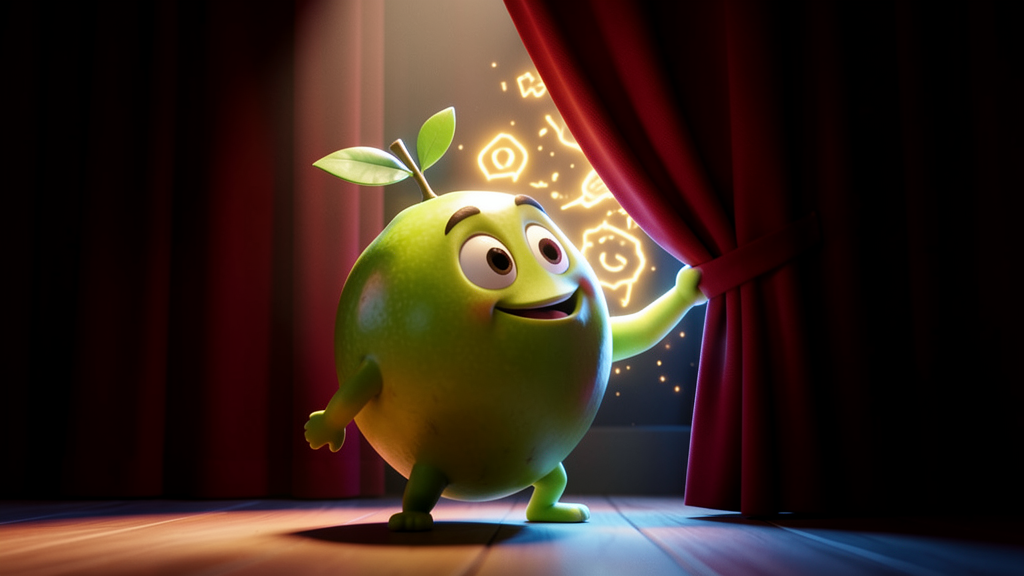
How to build your own twist
Start from the ending, not the beginning. Decide what the viewer will believe by the middle of the video — then ask what single new piece of information would make every earlier scene mean something different. That's your twist.
Pick the assumption you're setting up
Cheating, betrayal, a secret twin — name the trope you want the viewer to expect early.
Find the one detail that flips it
A phone call that sounds bad but isn't. A villain with a hidden reason. Keep it to one clean flip.
Don't explain the twist — show it
Let the reveal happen visually or in a single line of dialogue. Over-explaining kills the moment.
Let the ending recontextualize scene one
The strongest twists make the viewer want to immediately rewatch the opening with new eyes.
Generate Your Own Plot Twist
Describe your setup and your twist in one premise sentence — see the prompt formula guide for the exact structure — then generate it in Zyvo's AI Fruit Story maker.
Open the Paid AI Fruit Story Tool →Related Articles
50 AI Fruit Story Prompts and Viral Drama Ideas
Fifty fruit-drama prompts with adaptable ideas and an explanation of why each works.
15.05.2026
How to Write the Perfect AI Fruit Story Prompt (Formula + Examples)
A repeatable 6-part prompt formula, weak-vs-strong examples, and a formula variant for each drama type.
09.08.2026
AI Fruit Drama Videos: Story Structure and Workflow
Inside the AI fruit drama format — what makes it work and why it dominates TikTok.
14.05.2026
Every AI Fruit Story Drama Type, Ranked From Petty to Unhinged
A completely unserious tier list of every fruit-drama plot type.
17.08.2026


