
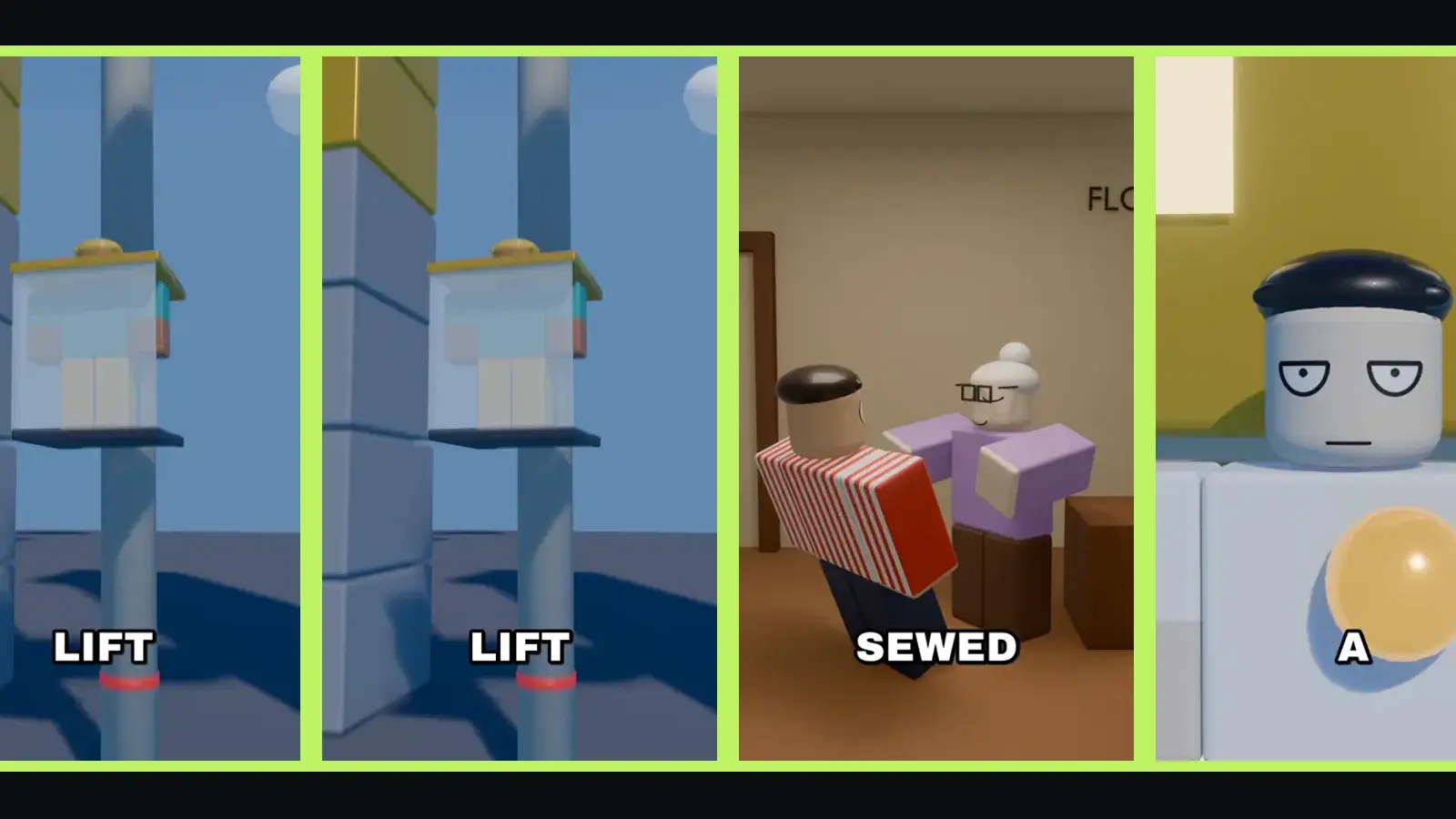
Viral Roblox-style story videos can look random: a giant kid, a flying grandma, a town inside a plane. But most of the good ones share the same skeleton underneath. This guide explains that skeleton beat by beat, with our own example story, so you can use the structure without copying anybody's script.
Video tutorial · 2:01
Full tutorial: make one with Claude AI
The whole workflow, step by step, from the idea to the finished animation.
More tutorials:
The seven beats
| Beat | What it does | How long |
|---|---|---|
| 1. The rule | Sets up the world in one sentence | 1 line |
| 2. Life under it | Makes the rule funny and real | 2–4 lines |
| 3. The one kid | Gives us someone to root for | 1–2 lines |
| 4. But one day | Breaks the routine | 1 line |
| 5. The crisis | Raises the stakes in steps | 4–8 lines |
| 6. The twist | Solves it with the rule | 2–3 lines |
| 7. The cliffhanger | Leaves the door open | 1 line |
Before beat 1 sits the hook: the craziest result from later in the story, said first. We'll use one example all the way through.
The hook: start with the result
I just tied the whole school to the ground with a skipping rope.
This sentence doesn't make sense yet, and that's the point. The viewer needs the next line to understand it.
Beat 1: The rule
You see, in this town, every time you get a compliment, you float a little.
Rules work best when they are said flatly, as a fact of life. The narrator is not amazed by it. To them, it's just Tuesday.
Beat 2: Life under the rule
This is where you earn the laughs. Two or three examples, each one a small joke with a picture:
That's why nobody here says "nice shoes". Mrs. Ambrose said her soup was "perfect" once. Now she cooks on the ceiling. Teachers grade in silence.
Notice that each example is something the camera can show: a ceiling kitchen, a silent teacher.
Beat 3: The one kid
Every story needs the exception:
And me? I'm Pax. Nobody has ever said one nice thing to me. I've never left the ground.
The one kid is usually the underdog: the one the rule ignores, the one it hits hardest, or the one who breaks it. That makes them easy to root for.
Beat 4: But one day
But one day, it was Compliment Day.
The routine breaks. In a good story the event comes straight out of the rule. If your rule is about compliments, the crisis should be about compliments too.
Beat 5: The crisis
Escalate in steps the viewer can see:
The principal told the whole school, "You're all wonderful." Thirty kids rose off the playground like balloons. The wind picked up.
Each step is bigger than the last, and each is a single image. Keep the lines short; let the pictures carry it.
Beat 6: The twist
The best twists use the rule, not new magic:
I was the only kid still on the ground. So I grabbed the skipping rope, and I tied every single one of them to the flagpole.
Our narrator wins precisely because the rule never touched them. The thing that made Pax the outsider is what saves everyone. This is also where a planted object pays off: if the skipping rope appeared in beat 3, the ending feels earned instead of convenient.
Beat 7: The cliffhanger
Then the principal looked at me and said, "Pax, that was amazing." And my feet left the ground.
A good last line flips the first one or opens a new problem. It's also what gets people commenting "part 2?".
Two styles the formula supports
Funny chaos: big, silly consequences; lots of jokes in beat 2; a twist that's a punchline. Milo, the kid who grows every time he laughs, is this style.
Dark twist: the rule hides something unsettling; small details feel "slightly wrong"; the twist is a reveal. Our coin tower story, where every kid who rides the lift up makes a warm coin fall from the sky, is this style.
Both use the same seven beats. Only the tone changes.
Plant and pay off
Strong stories mention three or more small things early that come back at the end: an object, a line of dialogue, a place. Viewers love noticing them on a second watch. Write the ending first, then go back and plant what it needs.
What not to borrow
The formula is a structure, like a chorus in a song. It is fine to use. What isn't fine is copying another creator's rule, characters, jokes or twist. Write your own town. The structure will still hold it up.
Checklist before you record
- Does the first line show the result, not the setup?
- Is the rule said within the first two sentences?
- Is every line something the camera can show?
- Does the twist use the rule?
- Did you plant what the ending needs?
- Does the last line flip the first or open a new problem?


